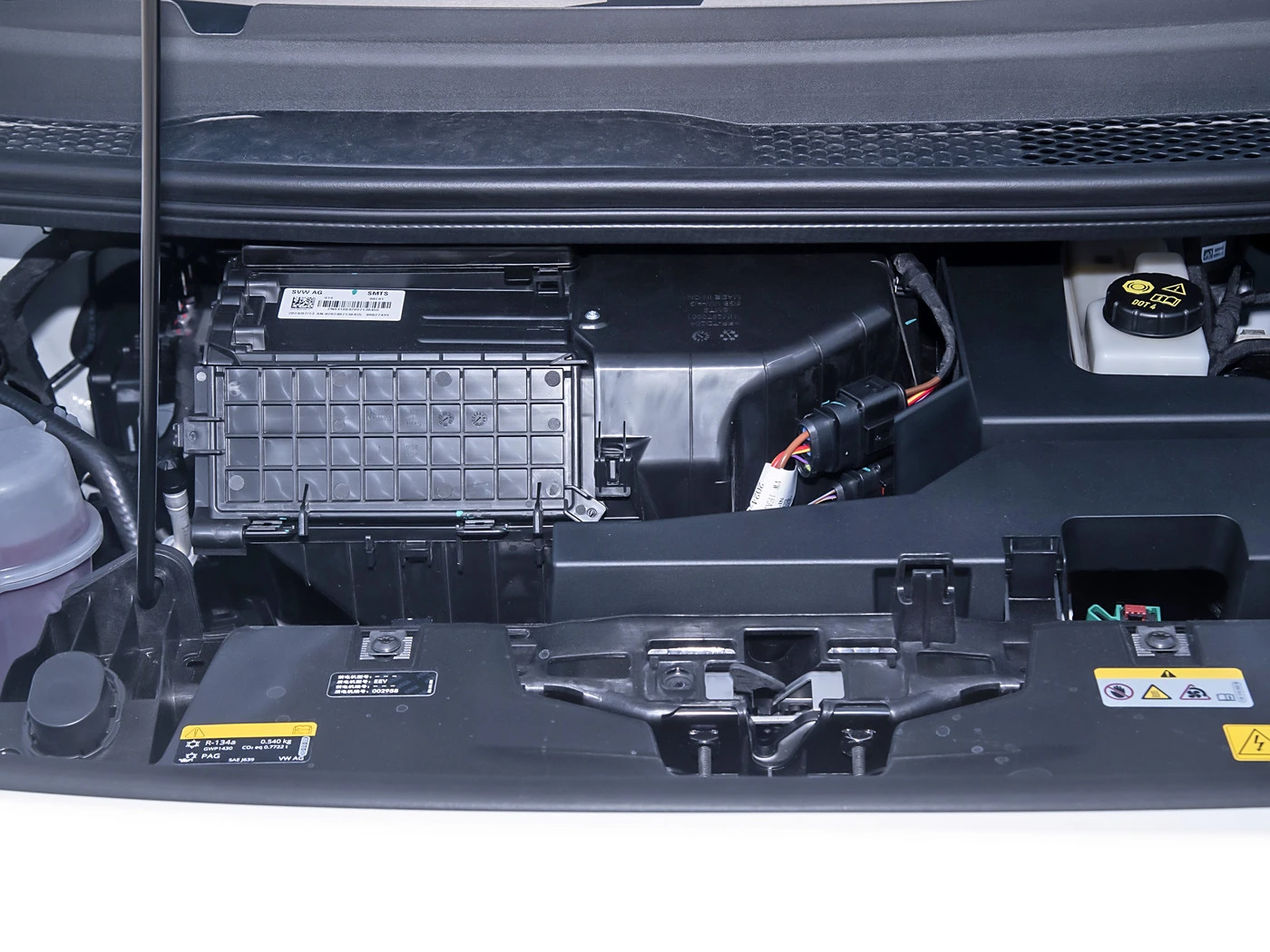

According to the manufacturer's maintenance manual, the first maintenance for ID3 should be done at 5,000 kilometers. During the first maintenance, no parts are replaced; it is mainly for inspection. Although this is the case, the first maintenance is still necessary. Why? It is not only a detailed "physical examination" of the initial usage condition of the new car but also a crucial step to ensure the stable operation of the vehicle in the future. Many people may think that the new car is in perfect condition and there is no need for maintenance so early. However, in fact, during this initial mileage, although the various components of the vehicle are gradually getting used to each other, some minor changes or potential hazards may occur, such as slightly loose screws or the calibration of the initial data of the electronic system. Through the professional and comprehensive inspection during the first maintenance, these small problems can be detected and solved in time, allowing the vehicle to start its subsequent journey in the best condition. Of course, there is no need to follow the manual's requirement of 5,000 kilometers for the first maintenance. It can be done around 10,000 kilometers, but it is best not to exceed 10,000 kilometers.
According to the manufacturer's maintenance manual, the regular maintenance cycle for the Volkswagen ID3 is every 1 year or 10,000 kilometers, whichever comes first. If we use the car normally, it is sufficient to have it maintained once a year. That is to say, even if you drive 20,000 kilometers in a year, you only need to go for maintenance once. Because the regular maintenance for our ID3 mainly involves replacing the air filter and inspecting the high-voltage components; the rest is just a check-up. Therefore, there is no need to go for maintenance too frequently.
As for the replacement of special fluids, such as brake fluid, it is necessary to consider it comprehensively based on your daily driving. According to the manual, the brake fluid should be replaced every 30,000 kilometers. However, you can test it with a brake fluid tester before replacement. If the water content is still within the acceptable range, you can choose not to replace it and check it again during the next maintenance.
For the Volkswagen ID3 models with optional heat pumps (early models), the R744 refrigerant needs to be replaced every two years as per the manual. The heat pump system utilizes the phase change characteristics of the refrigerant to efficiently transfer heat inside the vehicle, providing a comfortable temperature zone in both cold winters and hot summers, enhancing the driving and riding experience. However, as long as there is no leakage, the refrigerant generally does not need to be replaced. If the air conditioning in the car is not cooling or heating properly, then it is still in time to consider replacement.
Maintenance Cost Details and Money-Saving Tips
The maintenance costs for our ID3 are quite clear. For instance, if you only replace the air conditioning filter, the material cost is approximately $30. As for the cost of replacing the brake fluid, including materials and labor, it is generally around $86. Among this, the brake fluid itself accounts for about one-third of the cost, while the rest is for the use of professional equipment, precise filling, and exhaust, ensuring a rigorous replacement process without air bubbles remaining to guarantee braking safety.
For models with optional heat pumps that require the replacement of R744 refrigerant, the cost of the refrigerant plus professional operation labor is roughly $150. Due to the special nature of R744 refrigerant, which requires extremely high standards for recovery and filling equipment and is difficult to operate, the cost is relatively high.
Maintenance Tips
However, during our daily use of the vehicle, there are some maintenance tips that need to be kept in mind. For instance, always pay attention to the vehicle's battery level and try to avoid over-discharging the battery. When the battery level drops to around 20%, it is advisable to charge it promptly to protect the battery's lifespan. In adverse weather conditions such as heavy rain, heavy snow, or high temperatures, drive with caution. In heavy rain, try to avoid driving through water; if it is unavoidable, the depth should not exceed half the height of the wheel. On hot days, avoid charging immediately after prolonged exposure to the sun. Instead, park the vehicle in a shady area to cool down before charging. Regularly conduct self-checks on the vehicle, such as checking if the tire pressure is normal, if there are any damages on the tire surface, the degree of tire tread wear, and if all the lights are functioning properly. If any abnormalities are found, promptly visit a professional repair shop for handling to ensure a safe and worry-free journey each time.
The ID3 basically does not require much maintenance or upkeep during daily use. Just keep an eye on the vehicle's condition and use it normally. Then, have it checked at a repair shop once a year.